Private market forecasting software for forward portfolio decisions
TRTL turns allocator-defined assumptions, portfolio history, and current positions into forward cashflow and NAV forecasts for pacing, exposure, liquidity, performance, and valuation decisions. This helps investors make private market risk visible before outcomes arrive.
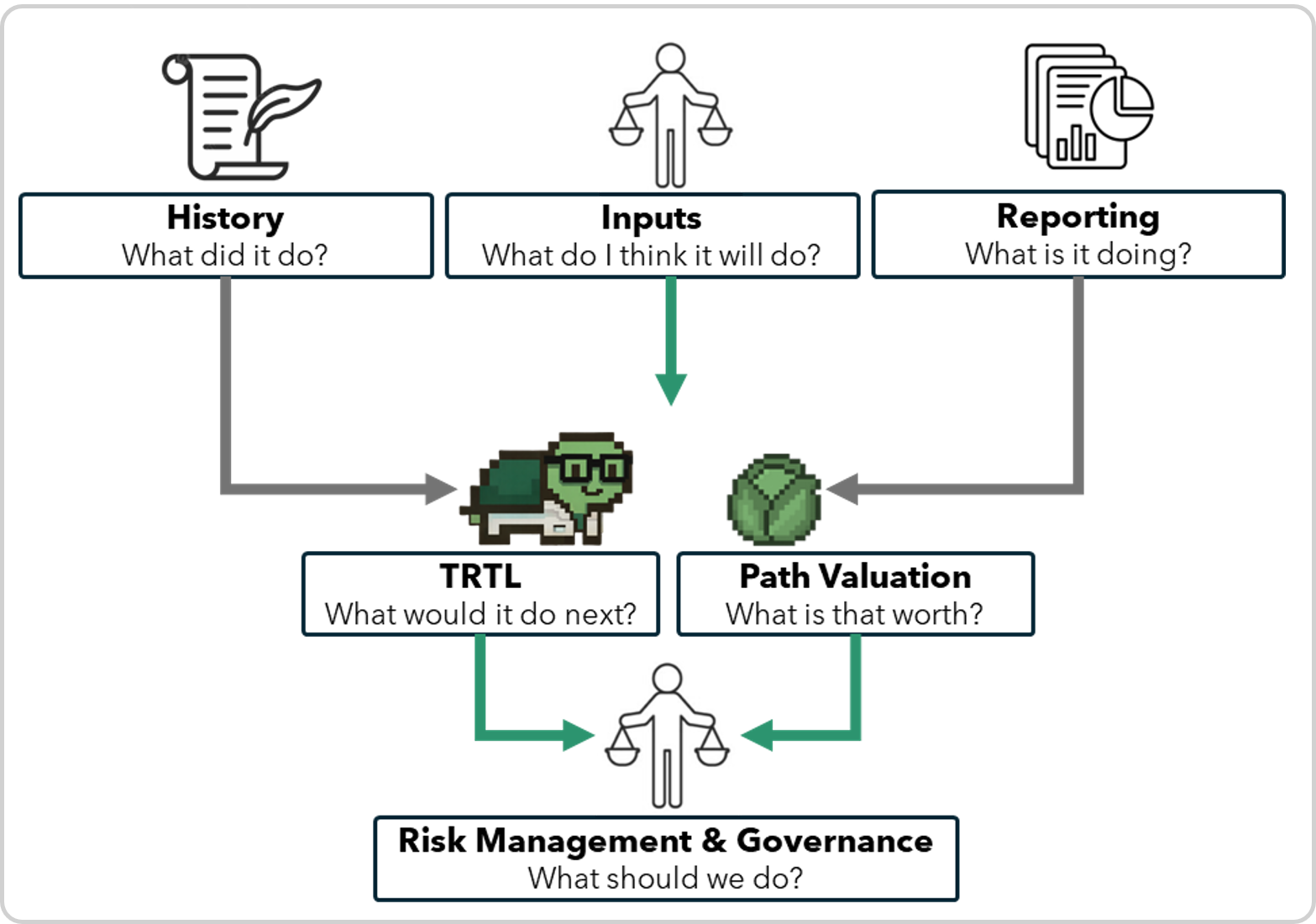
Private market portfolios are difficult to govern because capital calls are irregular, distributions do not follow a fixed schedule, and reported NAV can lag economic reality. Key decisions around commitments, liquidity, and risk often have to be made before the full picture is visible.
Unlike liquid portfolios, private market exposure cannot be adjusted quickly through simple rebalancing. Commitment decisions made today shape exposure and liquidity conditions years from now, while cashflows are realized differently than expected. As portfolios grow across funds, vintages, strategies, and structures, it becomes harder to maintain a clear forward view using backward-looking reports alone.
TRTL is designed to close that gap by combining allocator intent, portfolio context, and reported actuals into a forward view of cashflows and NAV.
TRTL starts with assumptions allocators already understand, including IRR, TVPI, term, utilization, commitment size, pacing assumptions, and strategy or structure context. It can also incorporate historical portfolio data and current reported positions so forecasts stay anchored to the actual portfolio.
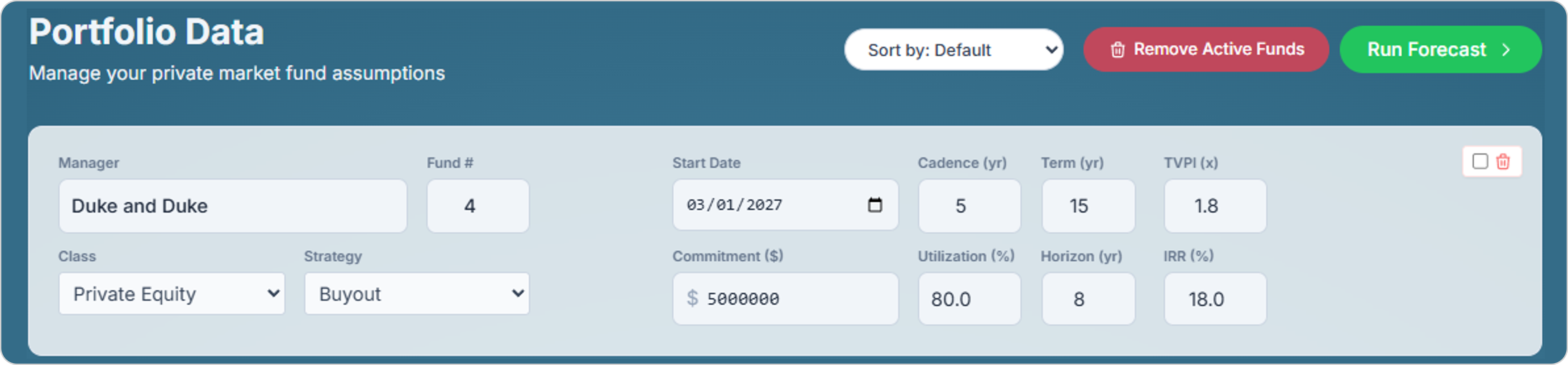
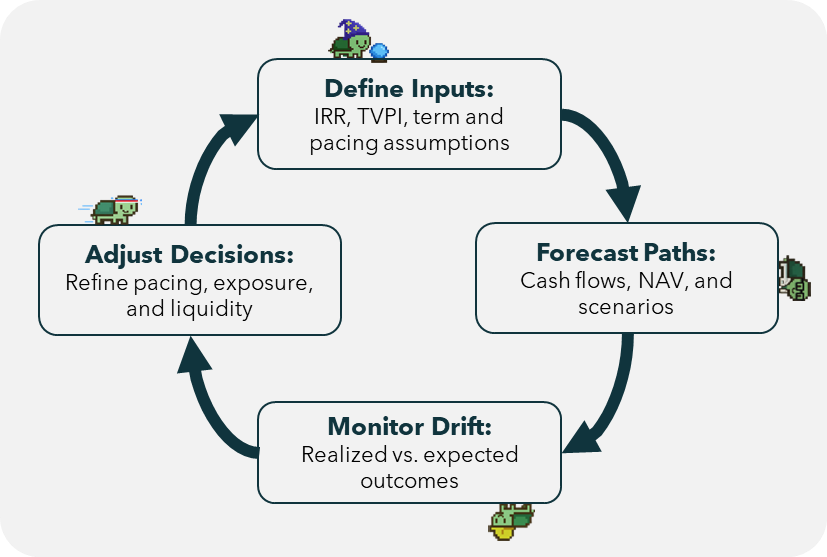
TRTL generates forward cashflows and NAV paths that support the main private market governance workflows by connecting pacing, liquidity, performance monitoring, and valuation to a common forward path.
Allocator intent defines the baseline. TRTL translates that baseline into forward cashflow and NAV paths that support pacing, exposure, liquidity, performance, and valuation decisions. As reported results arrive, the forward view can be updated so governance stays tied to current position rather than a stale underwriting case. The result is an ongoing loop in which assumptions shape forecasts, forecasts inform decisions, and new information continuously refines the path forward.
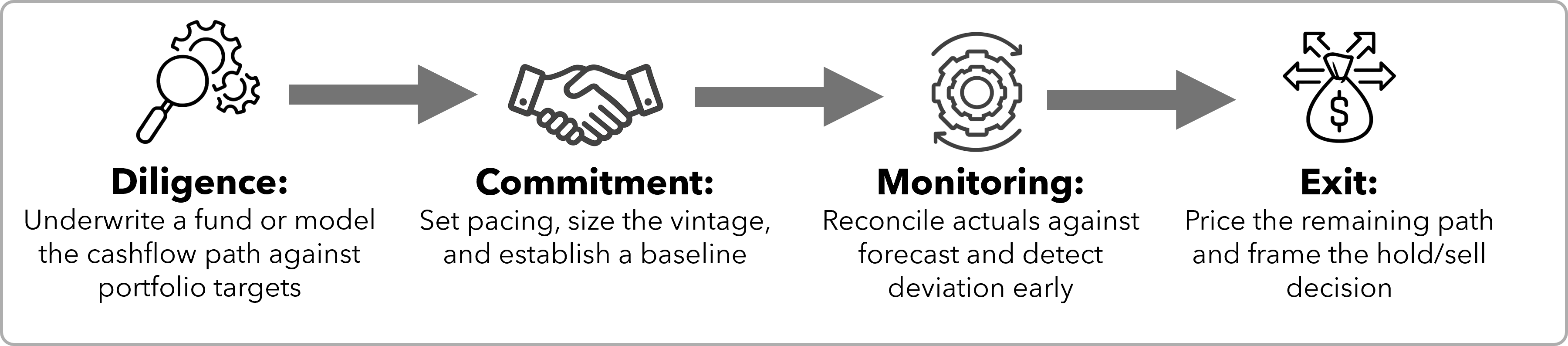
TRTL provides forward governance from diligence to exit. It supports decisions before commitment, during portfolio construction, throughout active monitoring, and later in the lifecycle when hold, sell, or valuation questions emerge. The same forward framework carries through each stage so decisions stay tied to expected and remaining path rather than isolated snapshots. That helps teams revisit assumptions, compare actual behavior with expected path, and make decisions with a clearer view of what remains ahead.
TRTL is designed to support private equity and broader private market portfolios across asset classes, strategies, and structures, including drawdown funds, evergreen vehicles, and direct investments. It helps allocators maintain a consistent view of pacing, exposure, liquidity, performance, and valuation across the full portfolio. That makes it easier to compare paths across portfolio segments, identify where pressure is building, and make decisions in a more unified way.
TRTL is built on structured private market cashflow forecasting methods informed by established illiquid fund modeling frameworks. The emphasis is not on black-box prediction, but on transparent mechanics that can be inspected, updated, and governed as actual portfolio experience develops. That helps make forecasting more interpretable, explainable, and decision-useful as assumptions and actuals evolve over time. The approach is especially relevant for private equity and other illiquid strategies where cashflow timing, NAV, and remaining exposure are difficult to observe in real time.
Most private market tools help teams report what happened. TRTL helps teams govern what happens next by connecting allocator assumptions, current position, and future portfolio behavior in one forward decision layer. Forecasting becomes a continuous decision process, not a one-time report.