Private market forecasting software for forward portfolio decisions
Liquidity forecasting projects future capital calls, distributions, and net cashflows so allocators can understand how much capital will be required, when it may be needed, and where pressure is building. TRTL helps turn private market cashflow uncertainty into a forward liquidity view.
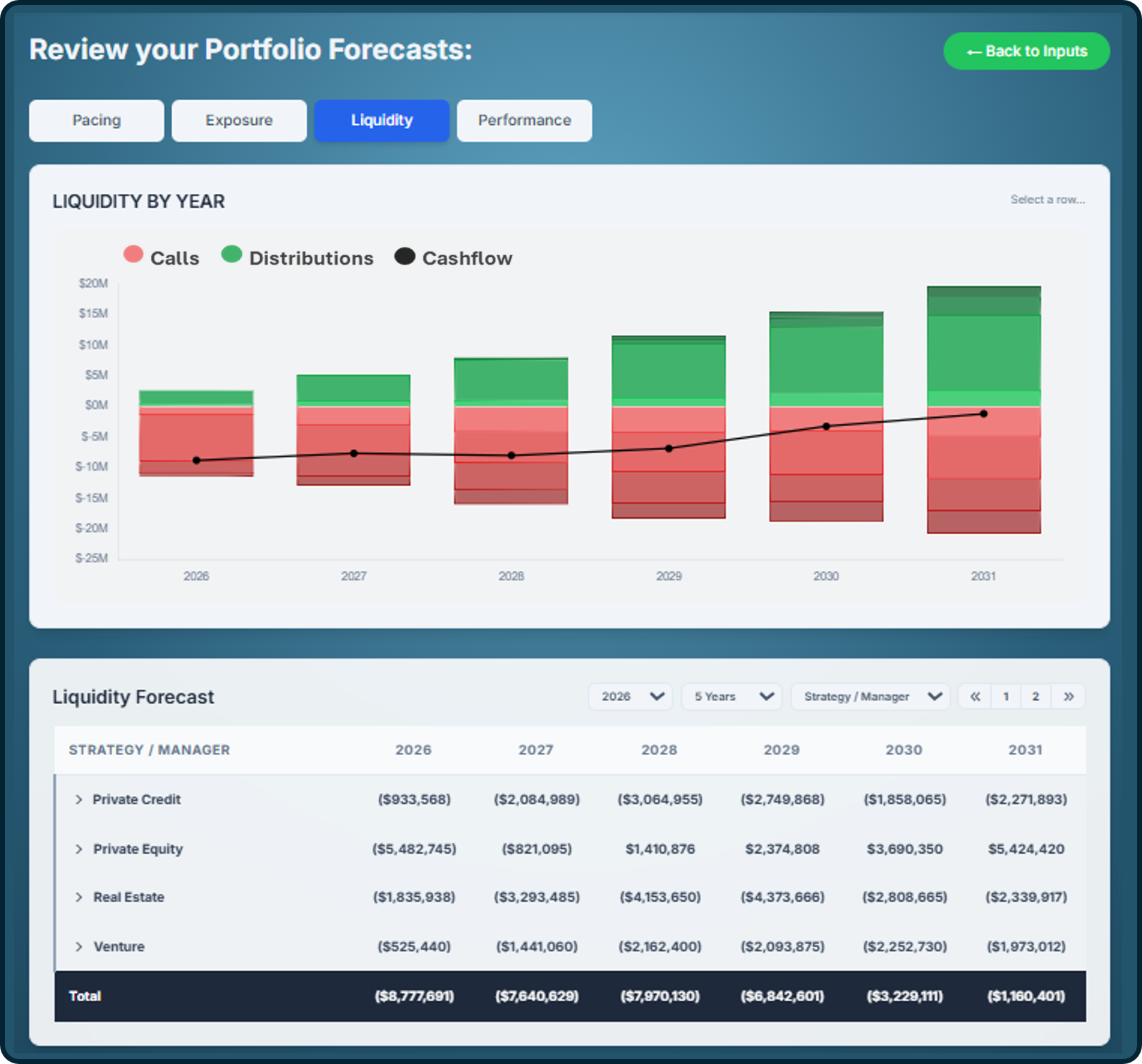
Liquidity in private markets is driven by uneven and uncertain cashflows. Capital calls can continue while distributions slow, especially during market stress, and reported NAV can lag economic reality. For private equity and other illiquid strategies, allocators need visibility into the timing of calls, distributions, and net cashflows before those cashflows fully materialize.
Unlike liquid portfolios, private market liquidity cannot always be managed through quick rebalancing or asset sales without cost. Forward liquidity visibility helps allocators understand funding needs, maintain flexibility, and make decisions before pressure forces action.
TRTL builds a forward liquidity view from projected calls, distributions, and net cashflows, allowing allocators to plan funding needs before liquidity pressure becomes a forced decision.
Liquidity forecasting is relevant at every stage of the investment lifecycle. Before commitments are made, it helps determine how much capital can be deployed. During portfolio buildout, it helps manage funding requirements as capital is drawn. As funds mature, it helps assess whether distributions are arriving as expected and whether liquidity conditions are improving or tightening.
Liquidity forecasting does not exist in isolation. Commitment pacing decisions affect future capital calls, and exposure build affects how capital is deployed and returned.
TRTL connects liquidity forecasting to the same forward path used for pacing and exposure management, so allocators can see how commitment decisions, exposure build, and cashflow timing interact across the portfolio. The goal is not to forecast liquidity in isolation. It is to see how today’s pacing and exposure decisions can become tomorrow’s funding pressure.
Liquidity pressure often becomes visible only after it has already begun to build. Without a forward view, allocators can be forced into reactive decisions: slowing commitments, raising cash, or selling assets when conditions are unfavorable.
TRTL helps identify liquidity pressure earlier, in one forward liquidity view